
The State of Texas has established a robust incentive program portfolio, making it a compelling destination for Taiwanese companies seeking to establish, expand, or invest in U.S.-based operations. Administered through the Texas Economic Development & Tourism Office, within the Office of the Governor, these programs span performance-based grants, workforce training subsidies, research partnerships, tax incentive zones, and capital access initiatives.
Why Texas?
As the top destination for foreign direct investment in the U.S. over the last two decades, Texas provides Taiwanese companies with a superior business climate and favorable regulatory environment. With low taxes, a skilled workforce, top-tier universities, and strong infrastructure, Texas is an ideal hub with access to major North American and global markets via land, air, and sea. The state’s fast-growing tech clusters in semiconductors, AI, and advanced manufacturing add to the appeal.
Texas and Taiwan already share strengths across a number of key industries, and with total trade between the two markets totaling more than $25 billion, the strong economic partnership continues to grow. In fact, in the last ten years, Taiwanese companies have announced more than $11 billion in capital investment in Texas, creating more than 3,500 new jobs. Moreover, an established Taiwanese business community in Texas provides a supportive network, facilitating smooth market entry and growth.
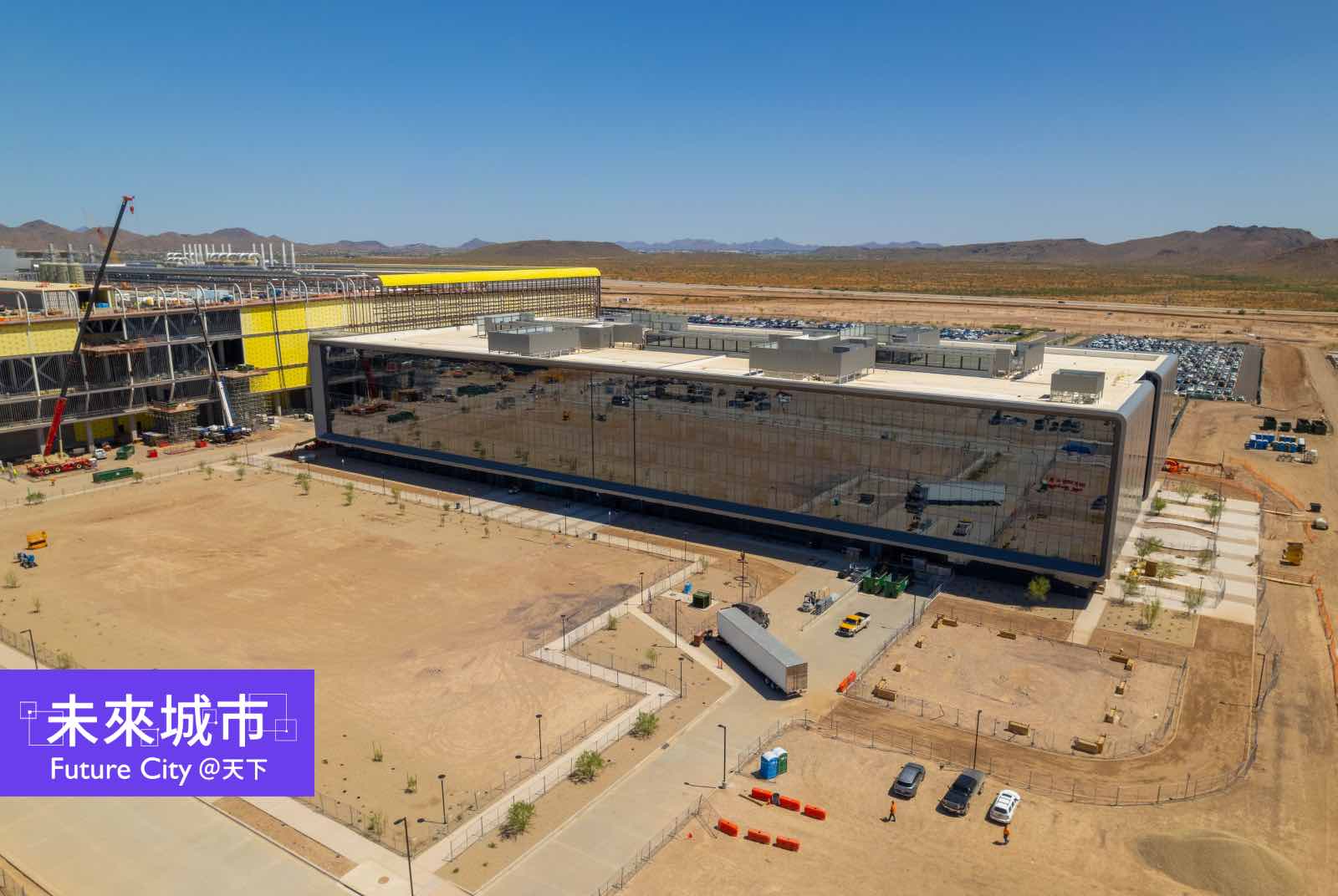
As the birthplace of the integrated circuit, Texas is where tomorrow’s technologies are born. Already the top U.S. state for semiconductor manufacturing capacity and the leading state for semiconductor exports for 15 years in a row, Texas continues to welcome investment from global innovators.
To support the further growth of this important industry, in June 2023, Governor Greg Abbott signed into law the Texas CHIPS Act to leverage Texas’ investments in the semiconductor industry, encourage semiconductor-related companies to expand in the state, further develop the expertise and capacity at Texas higher education institutions and maintain the state’s position as the nation’s leader in semiconductor manufacturing.
It created the Texas Semiconductor Innovation Consortium (TSIC) and the Texas Semiconductor Innovation Fund (TSIF) to help support semiconductor research, manufacturing, research, workforce development and design in Texas.
Understanding the Texas Incentive Structure
The State of Texas’ economic development model is decentralized, which allows local economic development organizations (EDOs) to drive the economic development process. In addition to the incentive programs offered at the state level, many incentives are offered at the local levels through municipal governments, county governments, and regional economic development organizations.
Texas offers opportunities across many industries and regions due to its size and wide-ranging economy. As a result, local communities have significant flexibility to structure incentive packages designed to attract and support specific investments. These local incentives may include property tax abatements, infrastructure support, workforce training partnerships, and other financial or operational benefits tied to a company's location and investment commitments. Local EDOs typically work closely with the state during the site selection process to assemble coordinated incentive packages that combine both state and local programs.
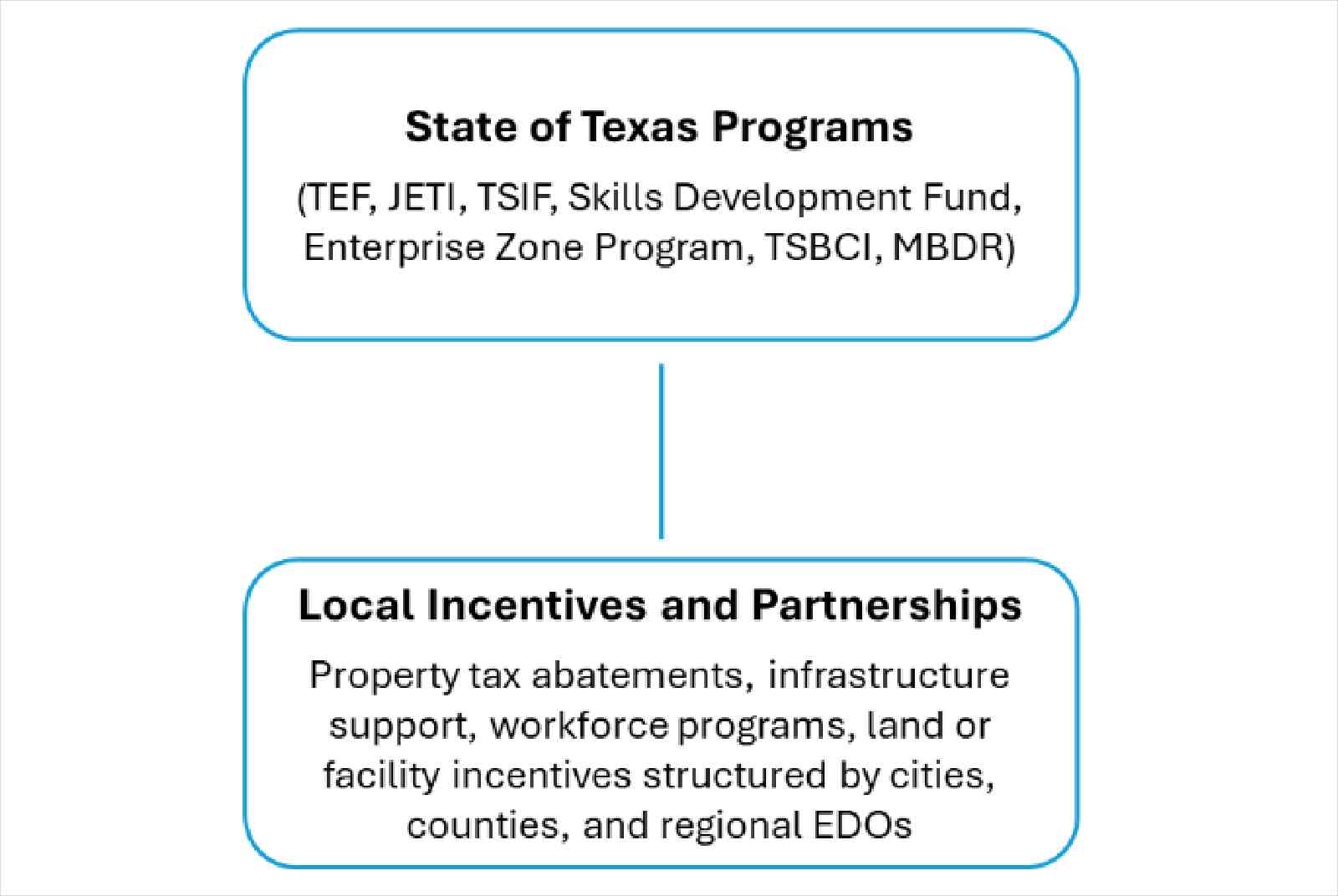 In addition to state-level incentive programs, municipal governments, county governments, and regional economic development organizations in Texas also offer supplementary incentives. Image credit: Texas EDT
Because local incentives in Texas are flexible and tailored to the needs of individual companies and communities, they are not structured as standardized statewide programs. This decentralized approach allows local governments to design investment packages that respond directly to the needs of a specific project.
The following section focuses on the major statewide incentive programs available in Texas, which often serve as the foundation for broader incentive packages developed in coordination with local partners.
Major Statewide Incentive Programs
Texas offers several statewide programs designed to attract and support business investment, job creation, technology development, and workforce training. The following programs are among the most widely used by companies establishing or expanding operations in Texas.
- Texas Semiconductor Innovation Fund (TSIF)
The Texas Semiconductor Innovation Fund supports the development of semiconductor manufacturing, design, and research capabilities within the state. The program provides matching grants to Texas-based companies undertaking semiconductor-related investments and supports partnerships between industry and Texas universities.
For Taiwanese companies involved in chip fabrication, advanced packaging, semiconductor equipment manufacturing, or chip design, the TSIF represents one of the most relevant state-level funding opportunities. Grants can help offset the costs of building new facilities, expanding production capacity, or developing new semiconductor technologies.
- Texas Jobs, Energy, Technology & Innovation (JETI) Act
The Texas Jobs, Energy, Technology & Innovation Act program is designed to attract large, capital-intensive projects that create high-quality jobs and long-term economic impact. The JETI Act utilizes a tiered structure based on the located-county’s population size to determine the level of required jobs and capital investment to qualify for the tax incentive.
Eligible projects include large manufacturing facilities, advanced technology investments, and energy-related infrastructure. For Taiwanese companies planning significant U.S. investments, JETI can play a meaningful role in improving project economics.
- Texas Enterprise Fund (TEF)
The Texas Enterprise Fund awards “deal-closing” grants to companies considering a new project for which one Texas site is competing with other out-of-state sites. The fund serves as a performance-based financial incentive for those companies whose projects would contribute significant job-creation and capital investment to the state’s economy regardless of industry. For international companies evaluating multiple U.S. locations, the availability of TEF funding can be an important factor in the final investment decision.
- Texas Enterprise Zone Program
The Texas Enterprise Zone Program is a state sales and use tax refund program designed to encourage private investment and job creation in economically distressed areas of the state by offering incentives tied to job creation and capital investment. Companies participating in the program often receive coordinated support from both state and local governments. For businesses with flexibility regarding location, Enterprise Zone participation can significantly improve the overall economics of a project.
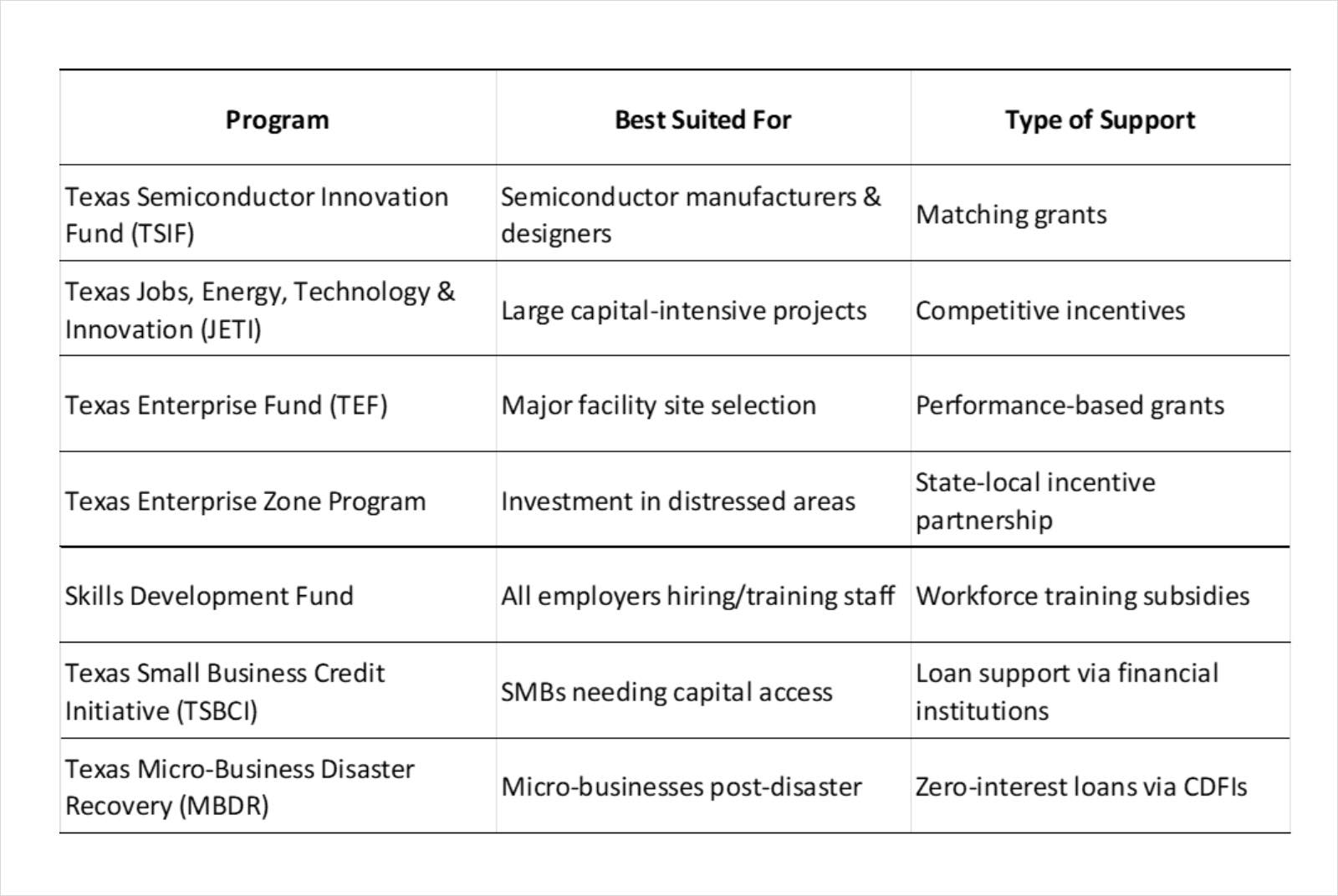 Summary of Key State Programs. Image credit: Texas EDT
Key Takeaways for Taiwanese Companies
- Texas offers particularly strong support for semiconductor and advanced manufacturing investment, reflecting the state’s strategic focus on technology supply chains.
- Many incentives function as competitive tools during the site selection process, with programs such as TEF and JETI being most impactful in head-to-head state competition.
- State programs represent only one layer of the Texas incentive system. Local governments frequently offer additional incentives that can significantly enhance the overall investment package.
For Taiwanese companies exploring U.S. expansion, engaging both state and local economic development organizations early in the planning process can significantly improve access to these opportunities.