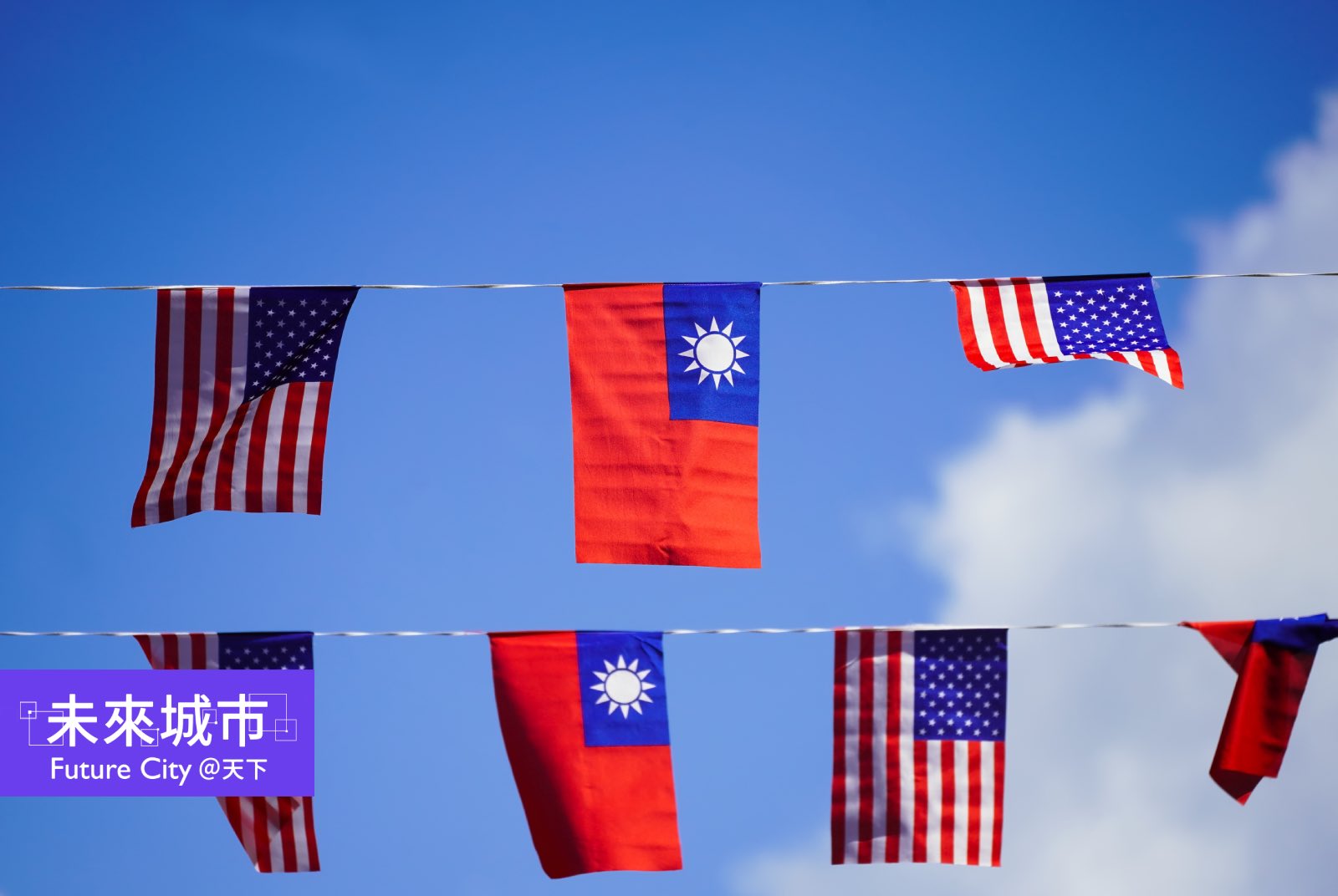
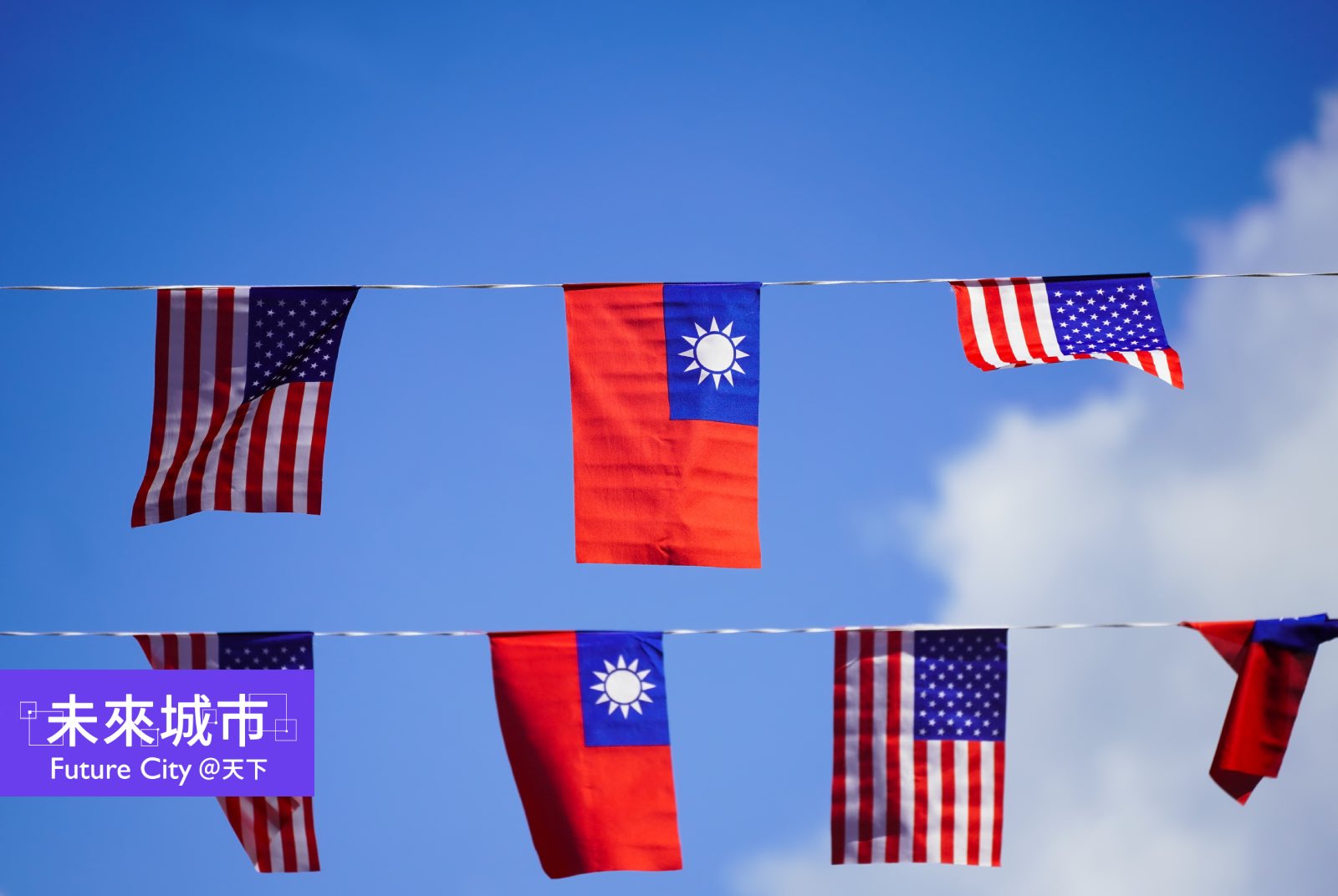
Thanks mostly to an AI-induced surge in semiconductor chip demand, U.S.-Taiwan bilateral trade in goods jumped from $159 billion in 2024 to $256 billion in 2025. In the beginning of 2025, the United States overtook mainland China as Taiwan’s largest export market, a striking reversal from the previous decade when as much as 40 percent of Taiwan’s exports went to the mainland or to Hong Kong. Even more astounding is the reverse pattern: the value of U.S. trade with Taiwan is now greater than that with the People’s Republic of China – the first time in almost 30 years that has been true. Taiwan’s stock market, too, has surged in total value, surpassing both the UK’s and Canada’s to become the sixth-largest in the world.
These astounding economic achievements create new geopolitical opportunities for Taiwan. The revolution in artificial intelligence currently unfolding across the world’s developed economies simply would not be possible without the advanced semiconductors and other information and communication technology (ICT) goods produced in Taiwan. And that has created a new willingness in Washington to deepen and institutionalize the U.S.-Taiwan economic relationship over Beijing’s objections. Taiwan would do well to take advantage of this moment to lock in new agreements with the United States.
The Agreements on Investment and Tariffs
Since the current Trump administration took office in January 2025, economic talks between Washington and Taipei have proceeded along two parallel tracks. The first has been focused on incentivizing Taiwanese investment in the U.S. semiconductor industry, most notably when the CEO of TSMC, C.C. Wei, appeared in the Oval Office next to President Trump in March 2025 to announce a new commitment of US$100bn to construct new fabs, cultivate suppliers, and build out a semiconductor ecosystem in the United States.
This initial understanding was finally expanded and codified in January 2026 in an Agreement on Trade and Investment between the Taiwan government and the U.S. Department of Commerce, which committed Taiwan’s semiconductor firms to invest at least US$250 billion “to build and expand advanced semiconductor, energy, and artificial intelligence production and innovation capacity in the United States,” and to provide credit guarantees of up to another $250bn to facilitate additional investment in the U.S. semiconductor industry.
The second track has been aimed at reducing tariff and non-tariff barriers and harmonizing regulatory frameworks in the bilateral trade relationship. These talks culminated in an Agreement on Reciprocal Trade (ART) signed in February of this year. Although overshadowed somewhat by the investment announcement, the ART is much broader and more significant, and if approved by each side’s respective legislatures, will enter into force as the first bilateral trade agreement ever between the U.S. and Taiwan.
The ART is also far more ambitious than the 21st Century Trade Initiative that was the chief focus of the Biden administration. As Ching-fu Lin notes, as written it has not only economic but also security implications for Taiwan. Among other features, it builds in additional measures that strengthen Taiwan’s export control regime and align it more closely with the United States.
Recommendations after the ART Signing
First: Taiwan’s legislature needs to pass the ART. The willingness of the Trump administration to enter into a trade agreement with Taiwan represents a remarkable shift in Washington, and for President Trump. For decades, successive Taiwanese governments have sought trade negotiations with Washington and been repeatedly rebuffed. For instance, during the Obama administration the Trans-Pacific Partnership (TPP) took priority over bilateral negotiations with Taiwan, and the Biden administration’s much more modest attempt at trade talks, branded as the 21st Century Trade Initiative, were ultimately not completed.
It is especially ironic that the U.S. president most hostile to international trade has also been the one to brush aside geopolitical objections to negotiating a new economic agreement with Taiwan. The ART represents a unique political opportunity to institutionalize bilateral economic ties – one that may never come again. The Legislative Yuan should approve the deal before this geopolitical window closes.
Second, the United States also has work to do. Congress needs to approve not only the ART but also the double-taxation agreement which has remained stalled in the Senate for years. Members of Congress who want to do something substantial to support Taiwan, should focus their attention on getting these two agreements approved rather than passing symbolic fluff like the Taiwan Travel Act.
And finally, observers in both Taiwan and the United States should keep in mind that China under Xi Jinping is a deeply problematic trading partner. Over the last 15 years, Beijing has pursued relentless “de-risking” of supply chains and the development of indigenous industrial capacity in dozens of strategic sectors throughout the Chinese economy. To support these shifts, the PRC has provided massive state subsidies to domestic firms while restricting or banning foreign participation. It has also doubled down on an economic model that suppresses domestic consumption in favor of state-led investment in infrastructure and industrial development.
The Chinese leadership remains firmly committed to an economic growth model that requires running large trade surpluses with the United States and the rest of the developed world, and to strictly limiting foreign business participation in most parts of the Chinese economy.
As a result, the U.S. business community has generally soured on the PRC market, on investment opportunities there, and increasingly even on reliance on PRC manufacturing supply chains. President Trump’s temporary détente with Xi Jinping in the so-called “trade war” of 2025, including tit-for-tat export controls, does not change the underlying reality: the PRC is an increasingly inhospitable place for foreign firms to do business.
Beijing has also not been shy about wielding its growing economic leverage for political ends, especially in the cross-Strait relationship with Taiwan. The Taiwanese know better than anyone else that economic dependence on mainland Chinese markets and suppliers is a strategic vulnerability.
It therefore makes both strategic and economic sense for Taiwan to further deepen its trade, investment, and supply chain coordination with the United States and other like-minded partners and allies. Approving the ART and following through on investment commitments under the ATI are a good place to start.